
Checking All the Boxes: How Ripple is Pairing Nutrition and Taste to Innovate in Plant-Based Dairy
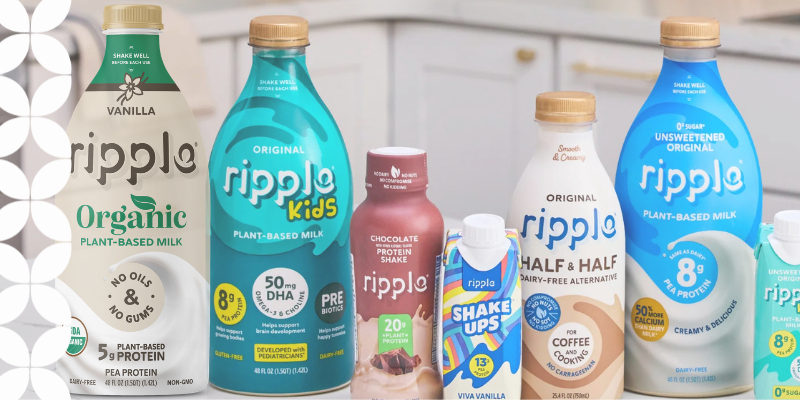
Since its founding in 2014 by Adam Lowry and Neil Renninger, Ripple Foods has been transforming the plant-based milk category with its innovative pea protein-based products. The company's pea protein platform delivers a creamy, satisfying taste while being free from the top allergens, making it accessible to a wide range of consumers. From their original milk to kid-focused formulas with DHA and prebiotic fiber, Ripple continues to prove that plant-based dairy can deliver on both taste and nutrition.
PBFA recently spoke with Ripple’s Vice President of R&D and Quality Andy Seaberg and Senior Brand Director Katherine Edwards to learn more about their company ethos, new organic offerings, and their work expanding access to plant-based milks through WIC packages.
Q: Ripple has become one of the best-known brands in plant-based dairy alternatives. What core problem did Ripple set out to solve when the company was founded?
A: From the very beginning, Ripple set out to make products that taste good, do good, and are good for you. At the time of our launch, there were no plant-based options that delivered on all fronts: high nutrition, sustainable sourcing from peas, top nine allergen-free, and great taste. We aimed to “check all the boxes,” and that commitment continues to drive everything we do today.
Q: Your products are built around pea protein rather than soy, nuts, or oats. What makes pea protein uniquely valuable from a nutrition, sustainability, or supply-chain perspective?
A: Peas are a highly sustainable crop, that use over 80% less water than almonds, and are regenerative which eliminates the need for fertilizer. They’re also packed with protein and free from the top nine allergens, making them a smart choice for families with diverse dietary needs. By pairing this nutritious, eco-friendly ingredient with our R&D expertise to eliminate the “plant-y” taste often associated with peas, we’ve created a protein base that’s both delicious and functional, perfect for Ripple’s products today and in the future.
Q: Ripple has emphasized both taste and nutrition as differentiators. How do you think about innovation in these areas, and what does R&D look like inside Ripple?
A: We have a “no compromise” approach within the company, and especially within R&D. We believe that plant-based products should taste great AND deliver great nutrition. This is what has made us a favorite amongst families with kids, as well as adults looking for a plant-based alternative to dairy milk. This high standard means we have very focused product categories we explore, and a constant R&D lens to continuously improve our base products to deliver even cleaner taste and/or more nutrition.
Q: Plant-based dairy still faces regulatory, labeling, and retail-placement hurdles. What barriers do you see in the current marketplace, and where could policy or industry collaboration help most?
A: Plant-based dairy plays an important role for consumers who can’t, or choose not to, consume animal products, and it’s essential that their nutritional needs remain front and center. One of the key challenges today is ensuring that regulatory and labeling frameworks reflect nutritional outcomes, not just processing definitions. This is where industry collaboration can make a real difference. We work closely with organizations like the Plant Based Foods Association (PBFA) to advocate for policies that consider nutrition and dietary needs. Greater alignment here would help create clearer, more consistent standards that better serve both consumers and innovators.
Q:Ripple recently gained traction with WIC approval in several states. What does this milestone mean for your mission, and what would expanded WIC access unlock for families?
A: We’re incredibly excited to be WIC approved in 22 states. Ripple is one of the few plant-based milks that meets WIC’s rigorous nutrition standards while also being free from the top nine allergens. At our core, we’re focused on creating a positive impact for both people and the planet. Expanded WIC access helps ensure more families can choose nutritious, great-tasting, allergen-friendly options, which is central to what we believe and why we do this work.
Q: Sustainability is central to the plant-based dairy conversation. How does Ripple measure and communicate its environmental impact, and what improvements or goals are you working toward?
A: Sustainability is core to how we operate, and becoming a certified B Corp is one of the ways we hold ourselves accountable. As part of that commitment, we measure our environmental impact across multiple dimensions: from sourcing sustainable ingredients like peas, to continuously reducing packaging, to finding ways to cut transportation mileage and emissions. We focus on making steady, measurable improvements year over year, with a goal of maintaining our strong B Corp score while delivering on the everyday actions that, collectively, can drive meaningful, far-reaching impact.
Q: How do you think consumer expectations around plant-based dairy are evolving? Are there any trends or misconceptions Ripple is responding to?
A: Consumers are becoming far more knowledgeable about plant-based dairy, particularly the benefits compared to traditional dairy, such as lower saturated fat and the absence of lactose and cholesterol. At the same time, expectations have risen significantly around both nutrition and taste. People no longer see plant-based as a compromise, and Ripple is well positioned to meet that higher bar.
One area that remains widely misunderstood is the conversation around “ultra-processed” ingredients. In reality, some ingredients, like gums or phosphates, play an important functional role. For us, they help keep a high level of protein evenly suspended, ensuring a consistent, enjoyable experience. We’re not willing to sacrifice nutrition or quality, and we believe there’s an opportunity for clearer education around why these ingredients are used and how they support both performance and taste.
Q: Ripple has expanded into products for kids and families. What insights are guiding your approach to product development for these audiences?
A: When it comes to kids and families, there’s always a dual mandate: parents want strong nutrition, and kids want something that tastes great. That balance is especially important, and more challenging, in plant-based. Our product development is deeply informed by real family insights. We routinely test new concepts with parents and kids and actively incorporate their feedback throughout the development process.
A great example is our Ripple Kids Chocolate Milk in a single-serve format. We worked closely with families to fine-tune both the sweetness and flavor profile, iterating until we found the right balance. The result is a kid-approved, Tootsie Roll–inspired chocolate flavor with only 9g of sugar, paired with the nutrition parents care about: high protein, DHA, choline, and prebiotics. That intersection of taste and nutrition is what guides every Ripple Kids product we bring to market.
Q: What’s next for Ripple Foods? Are there upcoming innovations, expansions, or partnerships you’re excited to share with the PBFA community?
A: Big things are coming at Ripple - we’re going organic! Our new Ripple Organic Milks deliver more protein than most plant-based options, are free from the top nine allergens, and taste delicious. It’s everything families love about Ripple, now with organic ingredients. We’re so excited to bring this next chapter to life and can’t wait for more people to find it in stores, pour a glass, and enjoy it as much as we do. You can find our new Organic Milks nationwide at select outlets, including Target, Sprouts, Harris Teeter, Hy-Vee, and Market Basket, with more coming on soon.