
Nature’s Fynd: How a Microorganism from a Volcanic Hot Spring is Revolutionizing Your Plate
Written by: Annie Taranshansky
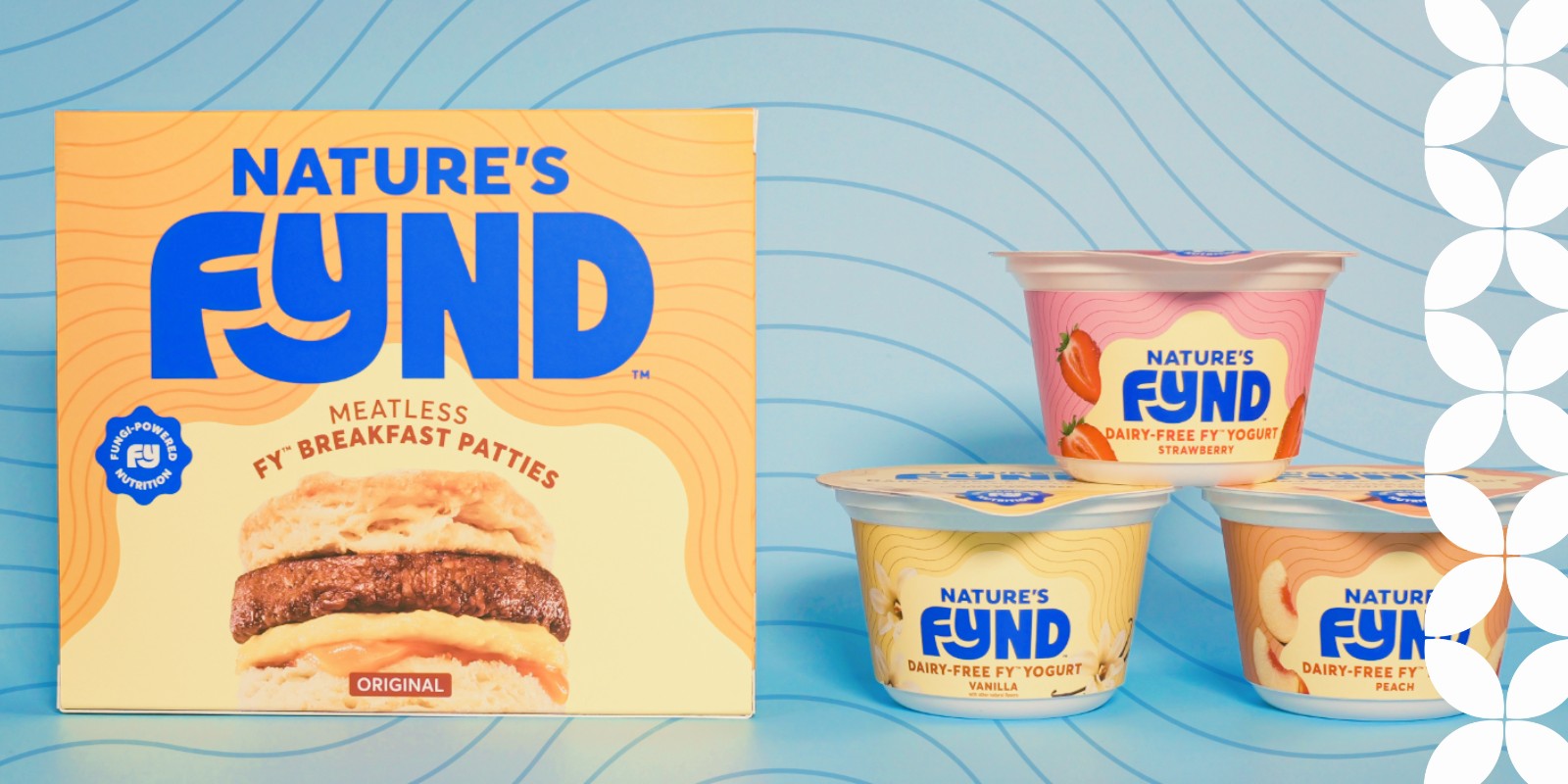
In an industry that strives to deliciously innovate around simple and planet-forward ingredients, one company is proving that doing more with less is possible. Nature’s Fynd was founded in 2018 by Thomas Jonas and Matthew Strongin in partnership with scientist Mark Kozubal, and the company is making waves in the plant-based food industry by pioneering a revolutionary approach to creating sustainable and nutritious food. At the heart of their innovation is Fy, a nutritional fungi protein discovered in the unlikeliest of places: a volcanic hot spring in Yellowstone National Park.
From a Volcanic Hot Spring to Your Local Grocery Store: The Origin of Fy
The story of Fy’s beginnings is an unconventional one. Backed by NASA, researchers conducted an extensive discovery process to explore the Yellowstone region's unique microorganisms. This discovery phase was part of a broader scientific effort to understand how life can exist and thrive in extreme conditions. Using cutting-edge sampling techniques and environmental analysis, they identified Fusarium strain flavolapis thriving in a volcanic hot spring – a newly uncovered strain of fungi which later came to be known simply as “Fy.”
“It’s what we call an extremophile microbe,” explains Deirdre O’Donoghue, a member of the team at Nature’s Fynd. “Because it’s not a picky eater, it can thrive in various environments, making it highly adaptable for food production.”

While the fungi was not initially extracted and studied with the intention of repurposing it for food production, Nature’s Fynd CEO Thomas Jonas saw a science and climate-forward opportunity and suggested experimenting with the protein as a food source.
The fungi’s adaptability allows Nature’s Fynd to grow Fy through fermentation, an old and natural technology that uses minimal resources. Nature’s Fynd has adapted the age-old technique and grows their own Fy in their own facility (in low-tech metal catering trays). The process is remarkably efficient, requiring no sun or soil and capable of operating year-round.
“It’s similar to a sourdough starter,” O’Donoghue explains. “You start with a small sample, and it keeps growing, producing a virtually unlimited amount of protein.” With a little help, it is completely regenerative.
You can watch professional science communicator Hank Green further explain the science behind the fungi here.
A Mission Centered Around a Sustainable Future
Nature’s Fynd’s mission is clear: to create foods that nourish people and nurture the planet. Their core values of deliciousness, nutrition, and sustainability guide every product they develop. “Taste is king,” says O’Donoghue. “If people don’t have to compromise on taste, sustainability, or nutrition, that’s the magic formula.”

All of the company’s Fy is currently produced in their Chicago facility, grown close to a dense city center conveniently situated in the middle of the country – meaning, a significant reduction in transportation emissions. By bypassing traditional agricultural dependencies, they can grow protein in urban areas, remote regions, or anywhere else with controlled conditions.
Because Fy does not need to rely on conventional agricultural systems, Nature’s Fynd has eliminated the need for resource-intensive farming and processing, significantly reducing land, water, and energy usage. According to 2023 Frontiers Special Issue released by the United Nations Environment Programme, fermentation-based protein production can cut land and water usage by over 90% and greenhouse gas emissions by more than 80% compared to conventional beef production.
Fy’s natural properties also make it an ideal ingredient for a wide range of foods. Its neutral taste and fibrous, mycelium-based texture lend themselves well to a diverse catalog of delicious products. Nature’s Fynd currently offers products that span across multiple plant-based categories, including a yogurt and breakfast patties, both of which are available at Whole Foods.
Nature’s Fynd isn’t just stopping at their yogurt and patties. They have ambitious plans to expand their product portfolio, with a new offering slated for release in 2025. While details remain under wraps, the company envisions a future where fungi-based foods are as common as tofu or chicken. “Imagine walking into Chipotle and having the option to add Fy to your bowl,” O’Donoghue suggests. “We want fungi-based foods to be everywhere.” This vision extends beyond consumer products. Nature’s Fynd is also advocating for fungi-based proteins to be recognized in governmental dietary guidelines and financial programs for alternative protein production.

For O’Donoghue and the team at Nature’s Fynd, the work is deeply personal. “Being able to align my professional work with my values is incredibly fulfilling,” she shares. “We’re not just creating products; we’re creating hope for a better future.”
Science as a Solution
Nature’s Fynd represents a massive win for the intersection between science, sustainability, and culinary innovation. By unlocking the potential of fungi, they are paving the way for a more efficient and equitable food system. Their work serves as a reminder that even the smallest discoveries—like a single sample from a Yellowstone hot spring—can have a monumental impact.
“We’re focused on solutions,” O’Donoghue emphasizes. “Instead of dwelling on the challenges, we’re bringing real, science-backed answers to the table. If we can get people to make just one different choice a day, the collective impact on the planet could be enormous.”
You can learn more about Nature’s Fynd by visiting their website and following them on their social media @naturesfynd.