
How to Achieve Sustainable Success in Food: 4 Lessons from Industry Expert Maisie Ganzler
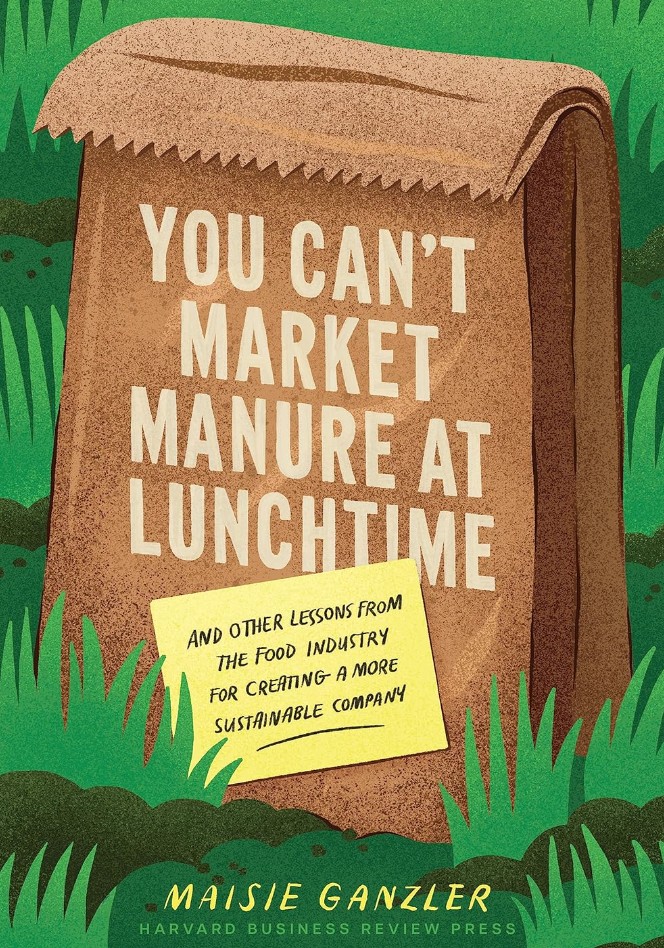
“You spray the shit in the air! People can’t breathe!,” reads the opening sentence of Maisie Ganzler’s new book “You Can’t Market Manure at Lunchtime: And Other Lessons from the Food Industry for Creating a More Sustainable Company.” If you’re like me – and heated debates over hog waste lagoons instantly pique your interest – then it is not a far jump from understanding how the politics of where and how hog farm waste is managed is intrinsically tied to the everyday realities of running a mission-driven business in the food industry. This is exactly the point Maisie makes again and again throughout her book: If you are setting out to build a company that values sustainability, responsible supply chains, animal welfare, consumer experience – and also making a profit – all of the questions you ask and decisions you make will intersect with a variety of interdependencies and outcomes that require you to be an expert (or near expert) in nearly all these fields.
Sounds daunting, huh? Well, the good news is having seen and navigated it all during her 30 year tenure at Bon Appétit Management Company, Maisie synthesizes the most salient frameworks and systems to help businesses evaluate for impact, find their “magic,” and do a great job at telling the story. A self-proclaimed “Food Systems Geek,” during her time at Bon Appétit, she drove strategy for the $2 billion organization, taking on issues such as local purchasing, antibiotics in meat production, sustainable seafood, humane care of farm animals, climate change, farmworkers’ rights, and food waste. Her efforts positioned the company as the foodservice industry’s undisputed leader in sustainable purchasing and holistic wellness.
From instruction on how to pick your battles, make sustainability a functional part of your mission, make a real impact (and how to deal when you fall short), and successfully telling your story, “You Can’t Market Manure at Lunchtime” is an essential guide for building a food business that “does it all.”
Working in the plant-based foods industry, a commitment to sustainability and values-aligned business is baked into the ethos of many brands. Many of our PBFA members are very familiar with the experiences Maisie describes in her book – like sourcing the best tasting ingredients grown using ecologically beneficial methods and/or building organizational objectives that keep a dynamic team aligned. I got the chance to speak with Maisie about her experience and here are the top takeaways for plant-based food brands to consider when aligning their sustainability goals for impact.
1. Build Sustainability Into Your Brand Mission
In the world of plant-based foods, there are so many potential benefits brands can capitalize on. While it is exciting to be able to be nimble and improve sustainability at every turn, it can be overwhelming to attempt to attain “perfection” all at once. Your efforts toward sustainability need to make sense within the context of your brand as well as your company’s mission. In the case of Bon Appétit, their founder named their mission statement the “dream” to properly convey the inspirational and aspirational nature of what they set out to do.
As the company’s focus on sustainability grew with time, they set out to rewrite the dream and eventually it became:
Our Dream is to be the premier onsite restaurant company known for its culinary expertise and commitment to socially responsible practices. We are a culture driven to create food that is alive with flavor and nutrition, prepared from scratch using authentic ingredients. We do this in a socially responsible manner for the well-being of our guests, communities, and the environment.
As Maisie writes in her book: “Writing an authentic dream for your company or department requires defining your goals, values, and commitments. By aligning your words with your actions and weaving sustainability into your culture, you create a mission that not only shapes your company’s identity but also impacts your brand’s reputation, making it stand out in the eyes of customers.” Having clarity around what is important to your brand and how sustainability is baked into your ethos will help a team align action to deliver meaningful results.
2. Start Small, Focus, and Stay True to Your Roots
Navigating the ever-shifting terrain of food sustainability requires adaptability, according to Maisie. She champions a proactive stance, urging regular reassessment of commitments and strategies. In her book, Maisie references the Circle of Responsibility Matrix, a tool that helped her team track progress toward the sustainability commitments they had made in a way that balanced the reality of challenges that arise in implementation. Core to this idea is being very selective about which efforts align with the pillars of your brand. There are a variety of reasons why a plant-based food company would want to be on the cutting edge of the latest sustainability initiatives, but it is essential that the efforts are prioritized based on the mission of the company, the potential industry edge the effort would lead to (standing out in a category or aligning with an unmet consumer need), and important what is realistic given time and resources. Having a tool like the Circle of Responsibility Matrix, allows ambitious teams to track real, marketable progress, while also housing ideas to stay current and ahead of planning for new efforts when they make sense.
In her view, progress toward sustainability goals is a perpetual journey, with no endpoint in sight. She advises focusing on mastery in one sustainability aspect before contemplating expansion, prioritizing progress over an elusive state of perfection. “Hone what exactly the change that you're after as your point of differentiation,” Maisie said.
3. Balance Your Messaging to Tell a Successful Story
As the title of the book indicates, there is a proper time and place for communicating sustainability messages tailored to specific audiences. "In the world of food, pleasure is paramount," insists Maisie, highlighting the delicate interplay between taste and sustainability. When it comes to helping plant-based brands convey the sustainability benefits of their products, she advocates for tailoring messages to different audiences, stressing the importance of clear, transparent communication that avoids too much technical jargon. How can a brand strike that balance? She shares, “lead with descriptors that tantalize the senses, with the product's plant-based nature [and sustainability merits] serving as a subtle undertone.” Moreover, she underscores the efficacy of emphasizing positive aspects connected to sustainability, asserting that it's "easier to sell a product with something that's positive." Afterall, people want to feel good about the choices they make – the same way they want to enjoy the satisfaction of a good meal.
In the case of Bon Appétit, they did this by focusing on delivering the best tasting ingredients – to achieve that, they looked to local purchasing and working with farmers who prioritized growing methods that resulted in flavor-packed melons, tomatoes, and other crops. The sustainability merits of the initiative to prioritize local purchasing were inherent in the delivery of great tasting foods. As the consumer audience became more aware of sustainability in food and interested in values-aligned eating, it became a pillar of Bon Appétit’s consumer-facing marketing as well. Having the north star of delivering on taste helped sustain and reinforce the company’s commitment to sustainability – it was baked into their ethos.
Another key pillar of Maisie’s advice to brands is once you’ve nailed your strategy, get really good at telling your story and leveraging PR in the right ways. “Telling an engaging story about your efforts is one of the most important aspects of getting sustainability right—right up there with backing up your sustainability commitments,” Maisie writes in her book. “The goal is not just to be more sustainable but to be a brand known for it and to create a ripple effect spurring others to also make change.”
Finding ways that make sustainable actions an integral part of your brand is a tried-and-true way to keep sights on both the bottomline and mission.
4. Continue to Innovate and Stay Inspired
Ultimately, Maisie finds hope in the passion and innovation within the plant-based food industry. She remains inspired by individuals who dream big and push boundaries, knowing that their efforts will continue to drive positive change. “I am inspired by people who dream bigger than I do and make things happen faster than I can,” shared Maisie. The innovation in terms of products, ingredients, types of foods emerging in the plant-based industry have instilled Maisie with a sense that there will continue to be new opportunities that accelerate the industry forward – towards profit as well as potential to positively impact sustainability. She remains resolutely optimistic, buoyed by the pioneers who dare to dream big and push the boundaries of convention. Maisie's faith lies in the transformative potential of collective effort.
As Maisie’s book concludes: “You can’t market manure at lunchtime, but you can drive revenues and create brand loyalty by thoughtfully building sustainability into your corporate strategy. While your customers may not want to be burdened with the stinky details, they do increasingly care about how your product impacts their world.”
For more industry leading insights and advice, get your copy of “You Can't Market Manure at Lunchtime: And Other Lessons from the Food Industry for Creating a More Sustainable Company” here.