
Climate Change Worries Shoppers - How Marketplace Leaders Can Respond With Plant-Based
Written by: Julie Emmett

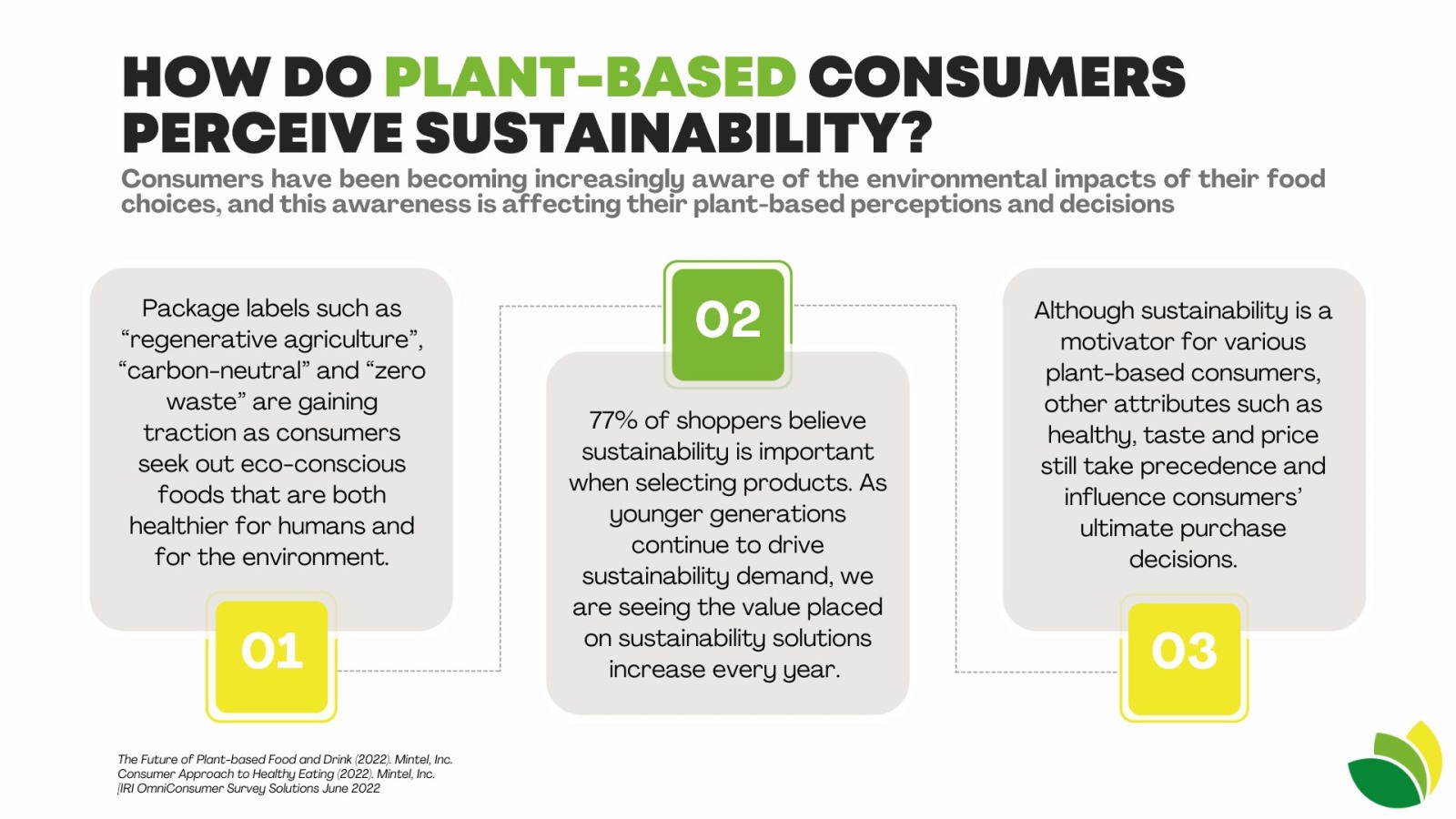
Awareness around the environmental impact of food choices is growing. New research from Kroger data partner 84.51° illustrates how this is translating into grocery purchasing decisions. According to the latest data, around 50% of Kroger shoppers are concerned about climate change and as a result, 29% are seeking out sustainable products while 22% say sustainability is very important when choosing which products to purchase. A recent article published in The Food Institute highlighted the connection between the 84.51° data and a recent consumer trends study from Innova Market Insights that hones in on what exactly consumers are looking for when it comes to meeting their sustainability interest: “Consumers in the U.S. and Canada say that they want more options for plant-based meals as a way to support sustainability.”
Sustainability Merits of Plant-Based Foods
Here at PBFA, we keep close track of consumer trends and what motivates the plant-based shopper. Interest in sustainability has steadily increased over the past few years as conversations around climate change, and importantly the outsized impact of industrial animal agriculture, have become more commonplace. Producing plant-based foods produces nearly half the greenhouse gas emissions of animal-based foods, while also significantly saving on water and land use. The plant-based foods industry represents a powerful opportunity to reimagine how we feed a growing population in a manner that respects ecological boundaries.
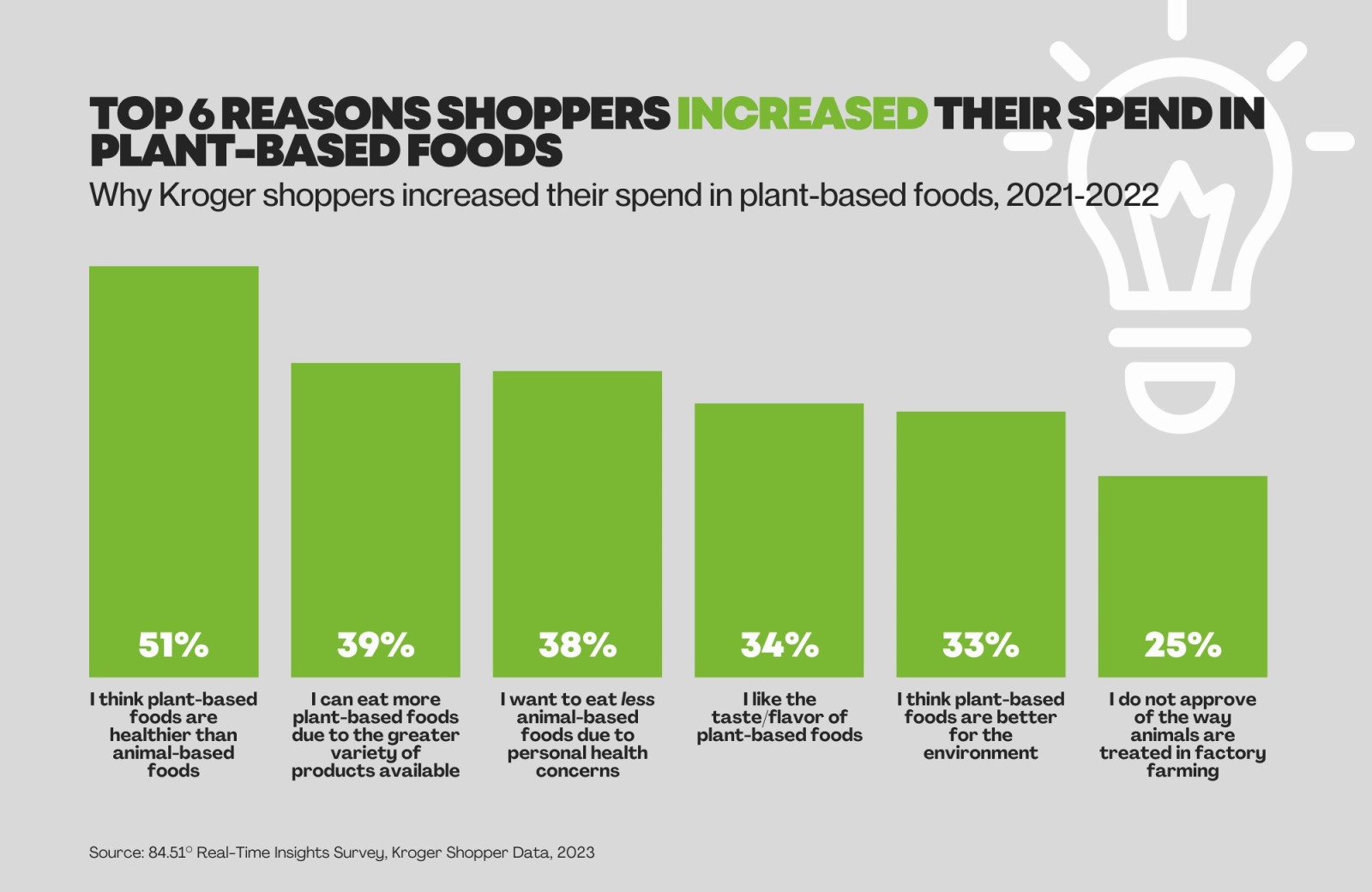
The good news is there is reason to believe that purchasing plant-based foods is becoming commonplace in supporting sustainable eating. In a 2023 PBFA survey conducted in collaboration with 84.51°, around 50% of all U.S. adults purchase plant-based foods, and 96% have either maintained or increased their plant-based consumption compared to a year ago. Additionally, 33% of Kroger shoppers indicated they increased their spend on plant-based foods because they think they are better for the environment. We see this mirrored in U.S. retail sales data for plant-based foods that shows household penetration remains at 62%, while repeat rate held strong at 81%.
Through PBFA’s partnership with Innova, we also see through their research that product launches with either an ethical environmental claim or ethical packaging claim have grown 12% from 2021 to 2023, while other attributes such as Non-GMO and Organic have declined double digits.
Retailer and Foodservice Commitments to Plant-Based Foods
This trend is being noted by forward-thinking retailers and foodservice operators as well, many of whom are working plant-based food purchasing targets into their ESG strategies to ensure long-term sustainability. A high percentage of retailer emissions, up to 93% according to McKinsey, come from their value chain. As McKinsey recommends in their Decarbonizing Grocery report, “the most powerful assortment-related lever is to offer plant-based alternatives to dairy and meat.”
Plant-based foods are at the intersection of consumer demand and environmental benefits. This fact has compelled leading retailers across the world to implement strategies to increase their plant-based offerings – and even introduce efforts to make plant-based foods easier for consumers to access. As part of their effort towards these goals, Sprouts promoted climate-friendly brands and in 2022 reported $3.2 billion in sales of products with a social or environmental attribute, and saw growth in plant-based food sales by 22% in 2023. Kroger’s 2023 ESG report also includes a reference to their wide-array of plant-based foods, including their private label plant-based brand that spans 60 categories, as “planet- and veggie-forward items may offer health, nutrition and sustainability benefits.” German retailer Lidl recently moved to introduce price parity for plant-based versions of animal-based foods to increase accessibility and aims to increase the proportion of plant-based protein sources in its German stores by 20% and plant-based dairy by 10% by 2030 to help meet climate goals. Ahold Delhaize brand Albert Heijn has committed to achieve a distribution of 60% plant-based and 40% animal-based protein sales by 2030. Further, Dutch supermarket Jumbo reports it has decided to stop promoting animal meat in favor of a transition to a more plant-based diet, pointing to “deplorable living conditions” of animals raised for feed.
Sodexo, one of the world’s largest foodservice companies, has committed to serving 50 percent plant-based meals at its campuses by 2025. This decision was made after a DefaultVeg pilot in partnership with Better Food Foundation and Food for Climate League. The results of DefaultVeg strategy demonstrated significant results, as shared in a press release from Sodexo: “two universities which implemented the plant-based default strategy most consistently during the pilot program saw an astonishing 150% increase in the rate of students choosing plant-based meals, resulting in up to 81.5% of students choosing plant-based dishes. Further, the shift led to a 23.6% drop in the greenhouse gas emissions attributed to food service across the three schools.”
Call to Action: Increase Access and Availability
As the examples above demonstrate, there are many ways that retailers and foodservice operators can deliver on both their commitment to building consumer trust and loyalty as well as their sustainability goals. We see throughout our PBFA membership innovative brands working to deliver delicious, culturally relevant foods to consumers to help them realize their values without compromise. Leveraging the Certified Plant Based seal is an effective way brands can ensure they’re making it as easy as possible for shoppers to identify products that are plant-based. Also, ensuring your product discovery profiles are set up with your certifications is paramount. For example, retailers use the RangeMe platform as a way to pull lists for possible set inclusion. According to RangeMe, sustainability attributes and certifications are searched for by retailers 3 times more than other certifications. As marketplace partners work to put plant-based foods at the center of their strategy, we anticipate retail merchandising strategies that favor a variety of plant-based options to grow as well as steady growth of plant-based menu offerings.
We believe industry is a powerful catalyst for change and the plant-based foods industry – ranging from a delicious mix of innovation and simplicity – offers an opportunity to realize a triple bottom line strategy in favor of people, planet, and profit. As consumer interest in sustainability grows, we look forward to partnering with marketplace stakeholders to help advance this promising vision for a food system with a lighter footprint and positive impact for all.